Bangka Belitung & Lampung, Indonesia
Grow forests.
Grow futures.
A movement restoring Indonesia's pepper landscapes through regenerative agroforestry—with farmers, for generations.
Planting for the future
Pepper · people · planet
climate-smart agriculture
agroforestry
participating
spice hubs
01 The movement
A forest can be
a farm. A farm can
heal the land.
aGROWforests brings trees, spices, knowledge, and livelihoods back into one living system.
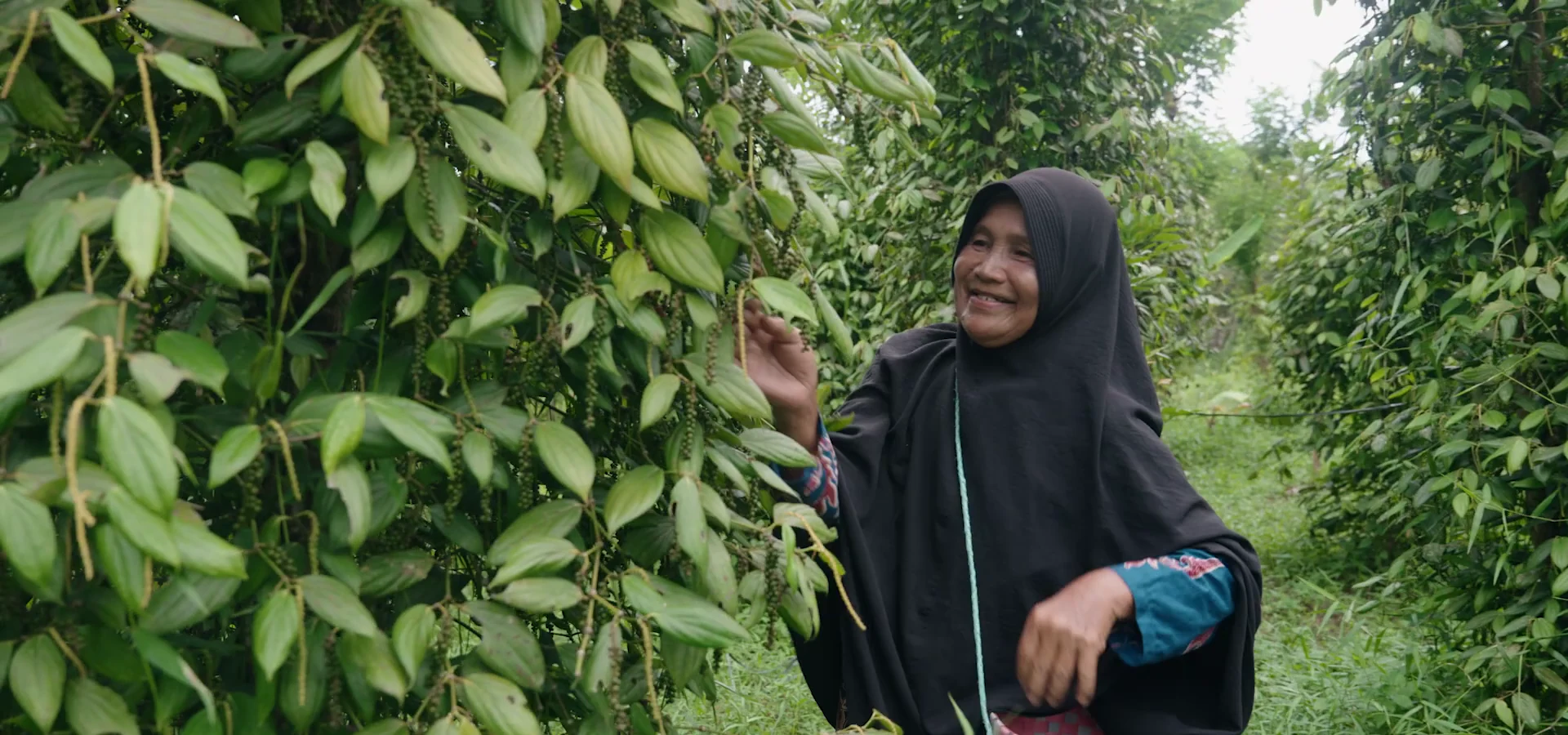
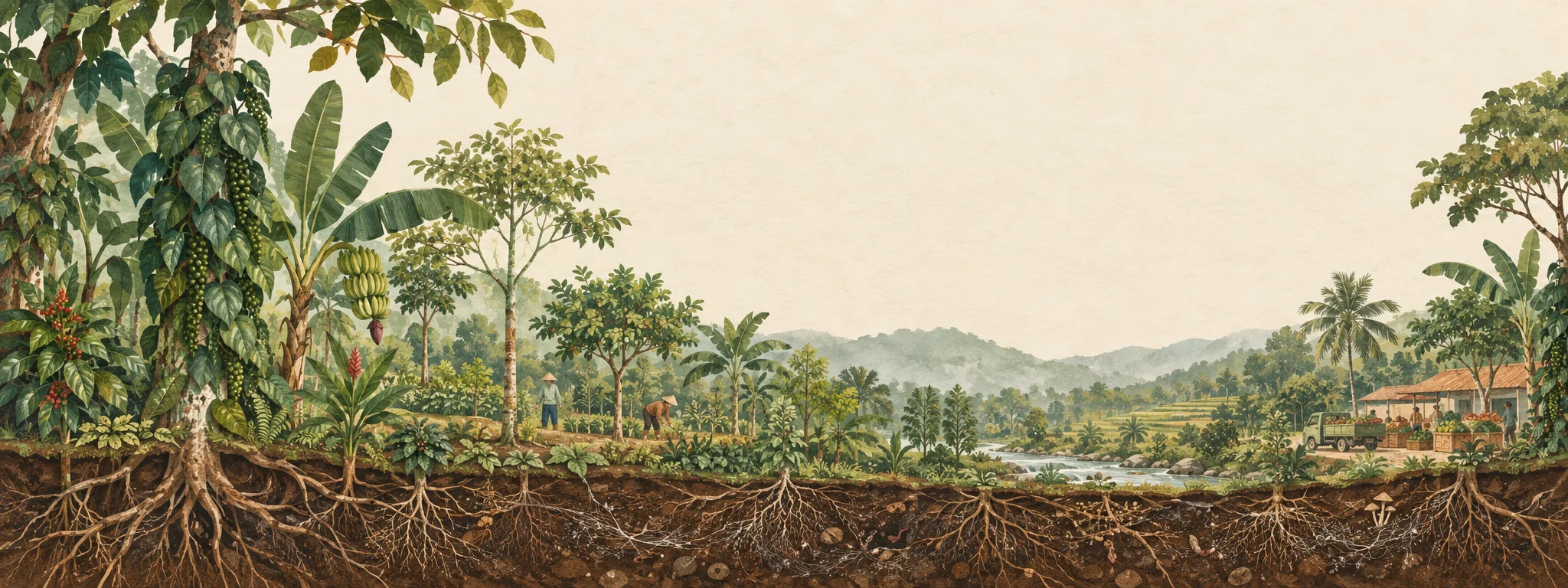
Working with smallholder pepper farmers across Bangka Belitung and Lampung, the movement turns vulnerable monocultures into diverse, climate-resilient landscapes—rooted in Bangka Belitung's own Kelekak tradition.
Start with the problem ↘02 Why this matters
Pepper country is
thinning out.
Two regions central to Indonesian pepper carry a global reputation—Muntok white from Bangka Belitung, black pepper from Lampung. The ground beneath that reputation is eroding for reasons that compound each other.
Pepper became harder to sustain
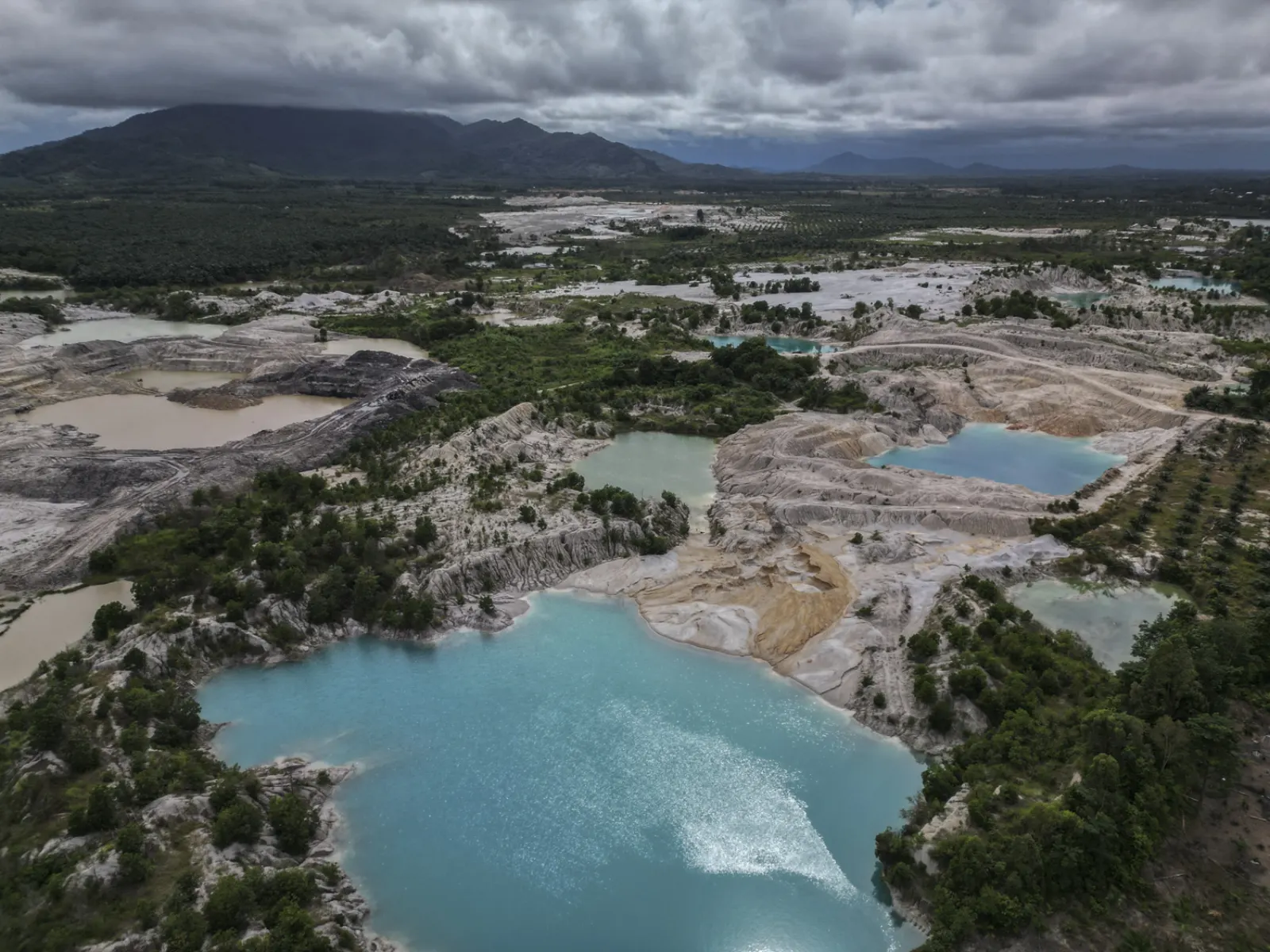
Falling prices have made pepper harder to live on. In Bangka Belitung, some pepper land has been converted to tin mining, oil palm, and other crops. Across both regions, many gardens have become harder to keep productive.
Monoculture has no defences
Rows of pepper standing alone on bare soil are exposed. Root and basal rot travel easily, soil thins, and yields drop season after season—so the farm needs more inputs to produce less.
The weather stopped being predictable
Prolonged drought and sudden heavy rainfall now make each season harder to read. Climate stress can reduce yields and destabilise household income before a crop reaches a drying mat.
The chemical cost lands on people
A fragile system can become dependent on chemical inputs, adding pressure to farm budgets and the surrounding soil and water.
The turn
Agroforestry answers all four at once. Trees give the vine a living support and shade. Roots hold water and rebuild soil. A mixed farm produces more than one thing to sell, so income no longer rides on a single price. And a system with its own balance needs far less put into it.
See where the work happens ↘03 Two landscapes, one vine
Bangka Belitung.
Lampung.
These two provinces are where Indonesian pepper is decided. They carry different traditions, different pressures, and the same need.
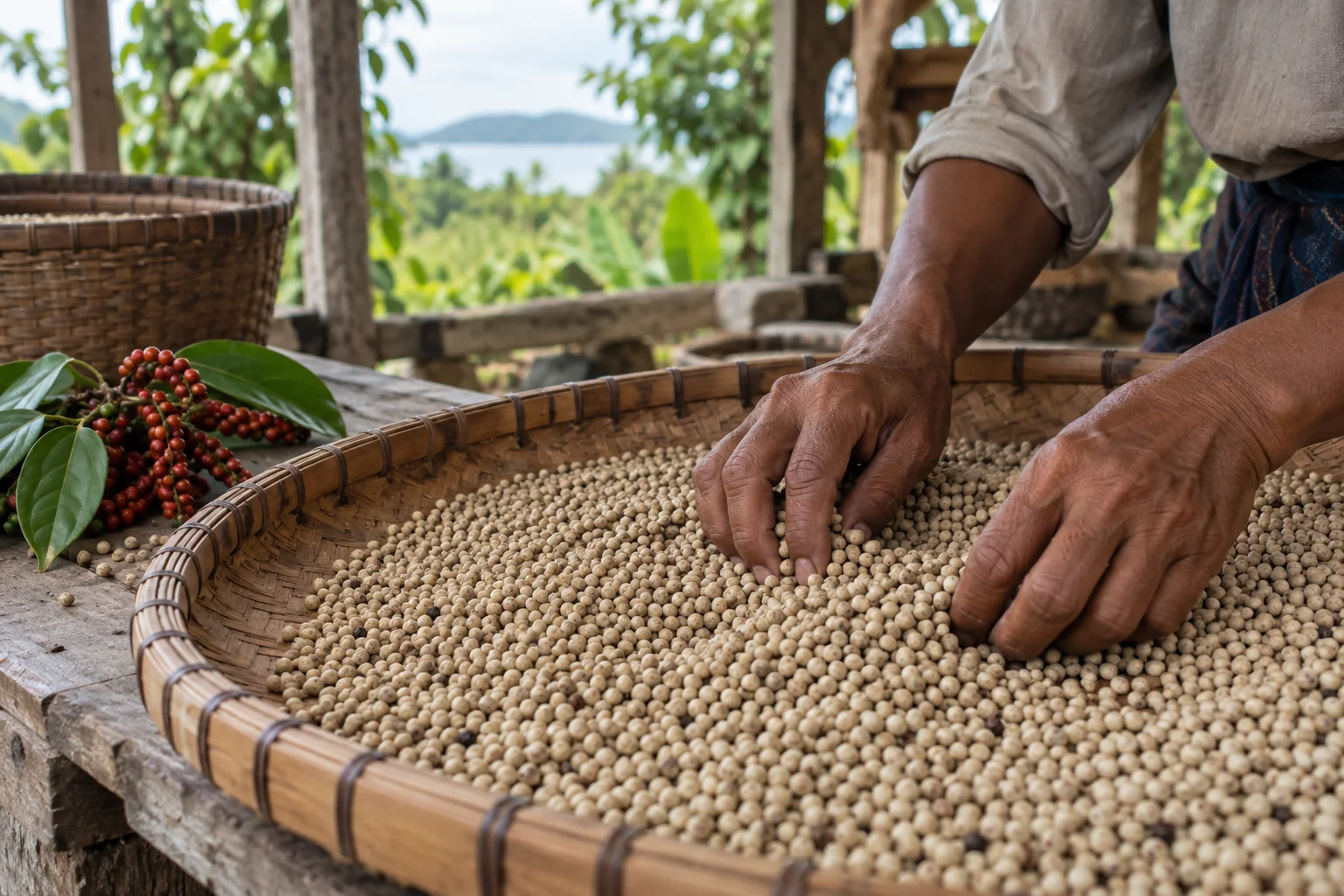
Muntok white pepper
A protected geographical indication, recognised in global markets as Muntok White Pepper. It is also grown alongside open tin pits, on land that has been mined, cleared, and mined again.
The opening here is Kelekak—a long-established Bangka agroforestry tradition that keeps trees, food crops, and livelihoods on the same land. Restoration is not a foreign idea in Bangka.
- GI Recognised origin
- ↻ Post-mining land
- ◎ Kelekak restoration
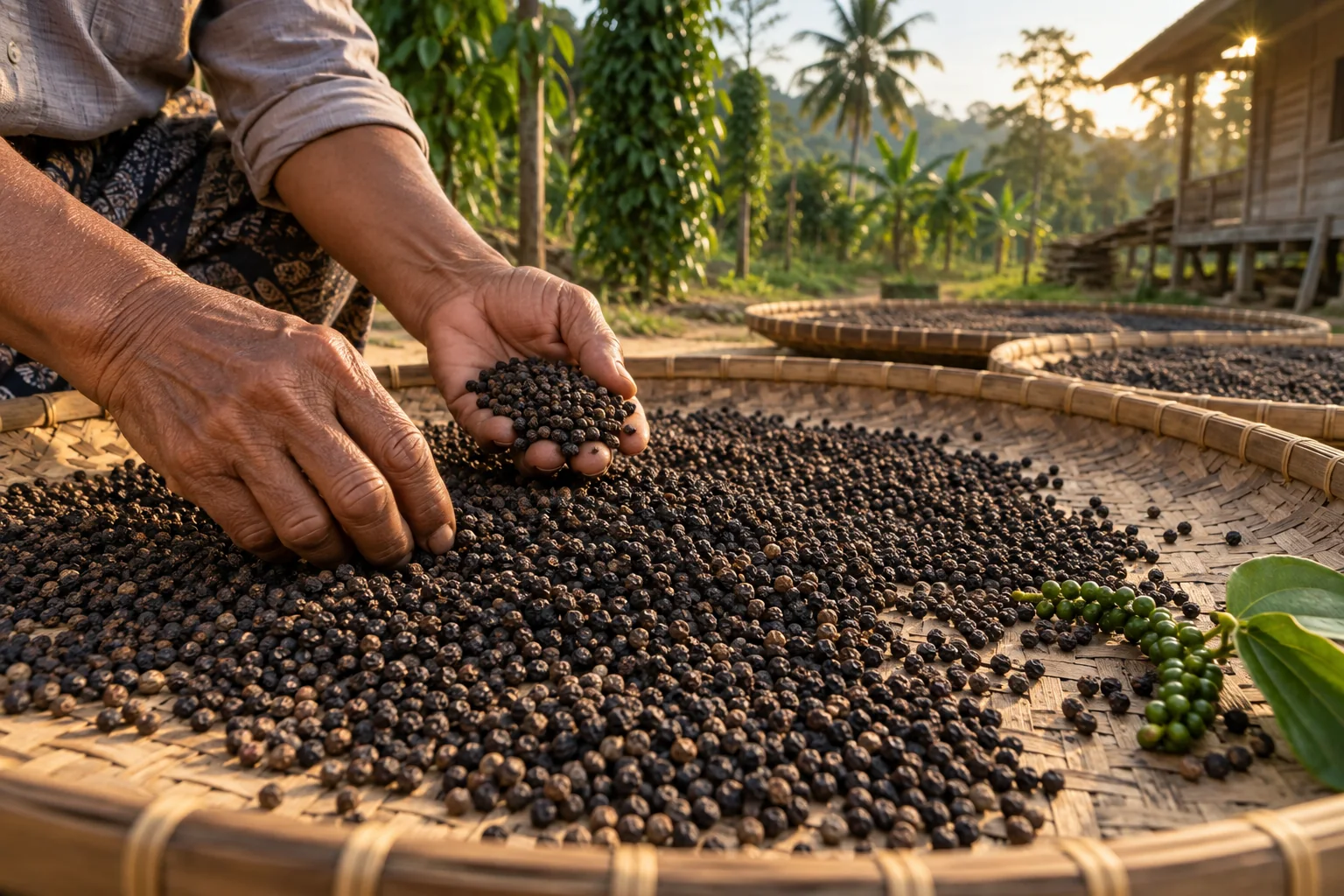
Lampung black pepper
One of Indonesia's most important black-pepper regions, where pepper is principally grown by smallholders with little margin for a failed season.
The work here is rehabilitation: healthy planting material, better practice, and trees put back between the rows.
- ◱ Smallholder plots
- ↓ Decade of decline
- ✚ Vine rehabilitation
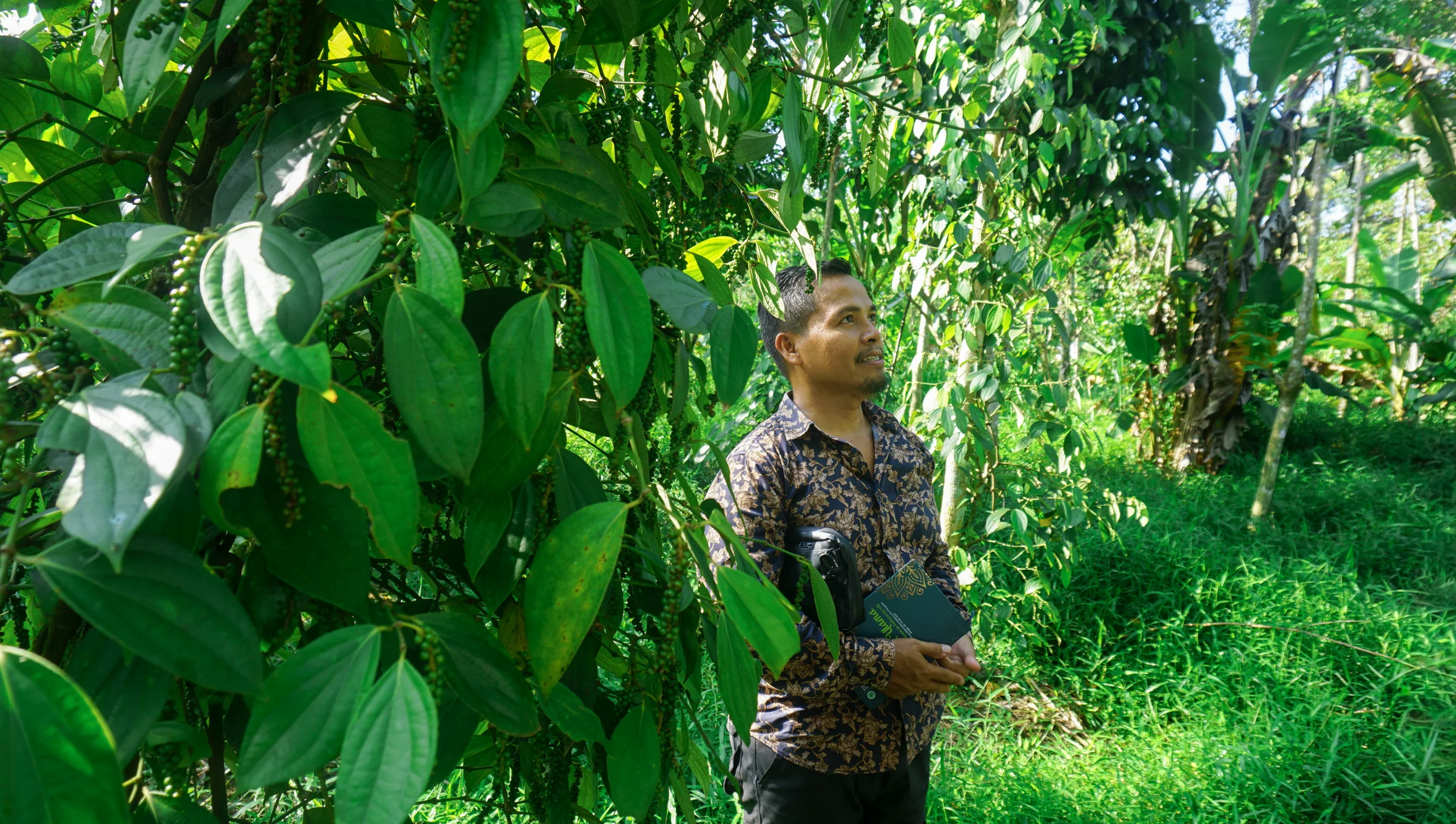
Bangka Belitung
"
Kelekak means planting for the future—a sustainable connection between people and nature.
The knowledge is already in the landscape. aGROWforests helps communities strengthen it with training, healthy planting material, shared infrastructure, and fairer value chains.
04 The network
Every hub is a place
and a team.
The spice hub is the unit everything else is built around—thirteen of them, planted inside farming communities across Bangka Belitung and Lampung. A hub is a physical base. Change Makers are the people who run it.
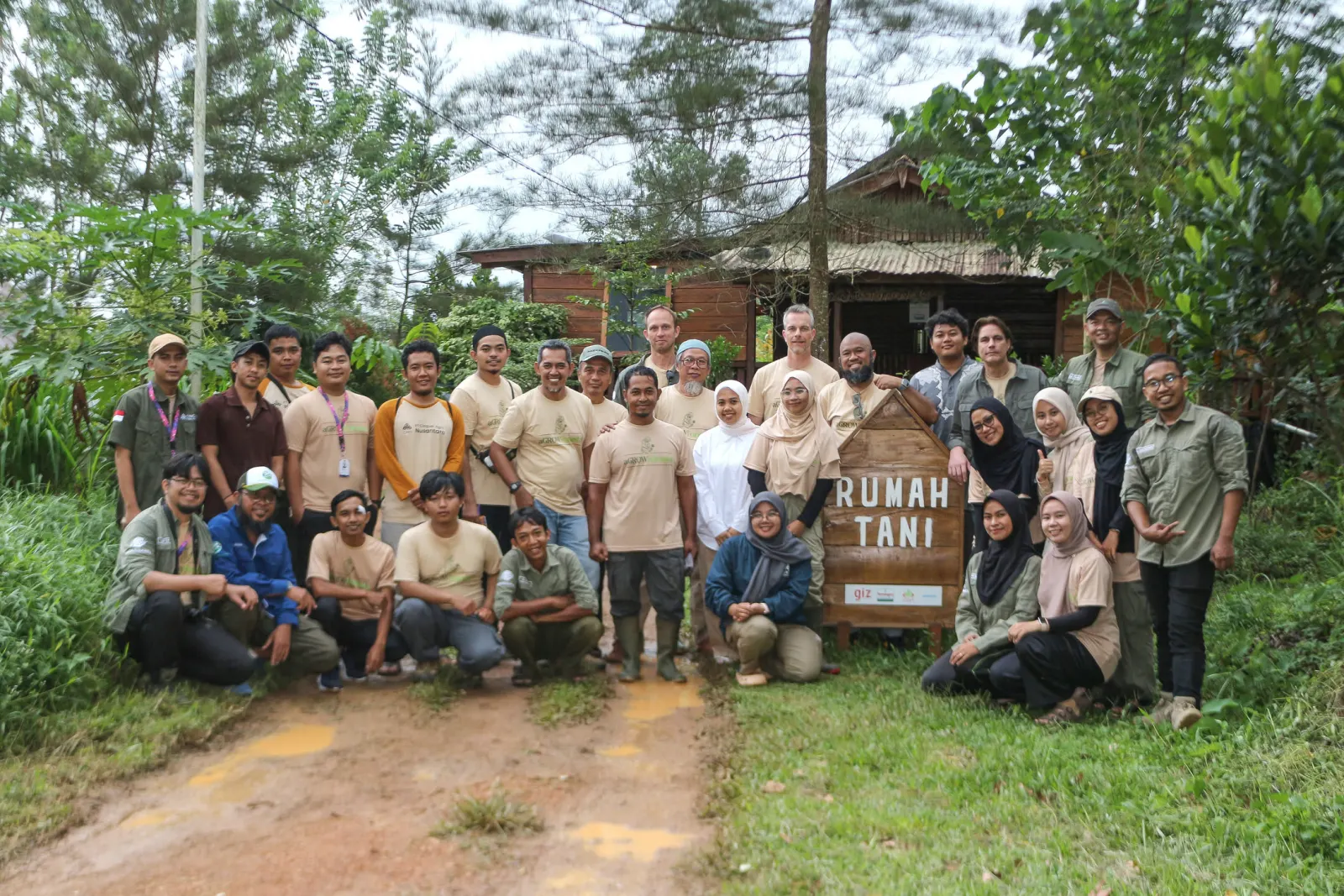
What a hub holds
A nursery
Pepper seedlings raised properly—prepared growing media, beneficial microbes such as Trichoderma and PGPR, and the facilities to do it at volume.
A training floor
Where farmers learn from each other and test climate-smart methods before committing their own land to them.
A consultation desk
Direct expert advice on what agroforestry means for one specific plot, with its own soil, slope, and history.
A meeting point
The place where the farmer group, the field team, the harvest data, and the buyer all end up in the same room.
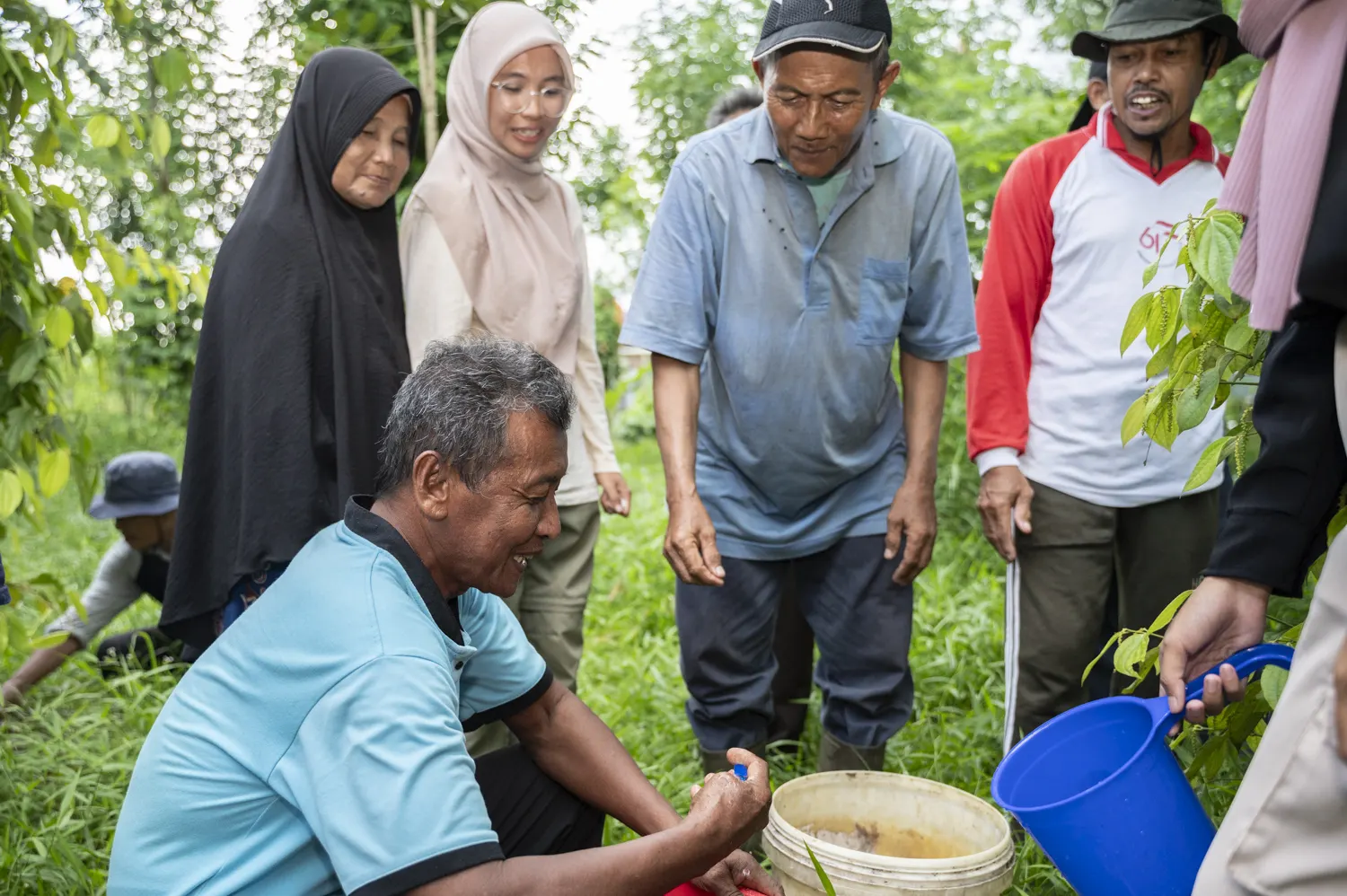
Inside every hub
Change Makers
Field trainers drawn from the communities they serve—trained first, then coaching farmers on agroforestry, farm economics, and well-being.
They are practical problem-solvers, and they stay after the workshop ends. Through the first six months of a farm's transition—the stretch where doubt does the most damage—a Change Maker is the person walking the rows with the farmer.
2,750farmers reached
by 2027
by 2027
30%women
participants
participants
15%youth
participants
participants
05 From roots to market
Regeneration,
made practical.
Nine connected parts turn agroforestry from an idea into something farmers can learn, test, grow, finance, and bring to market.
 01
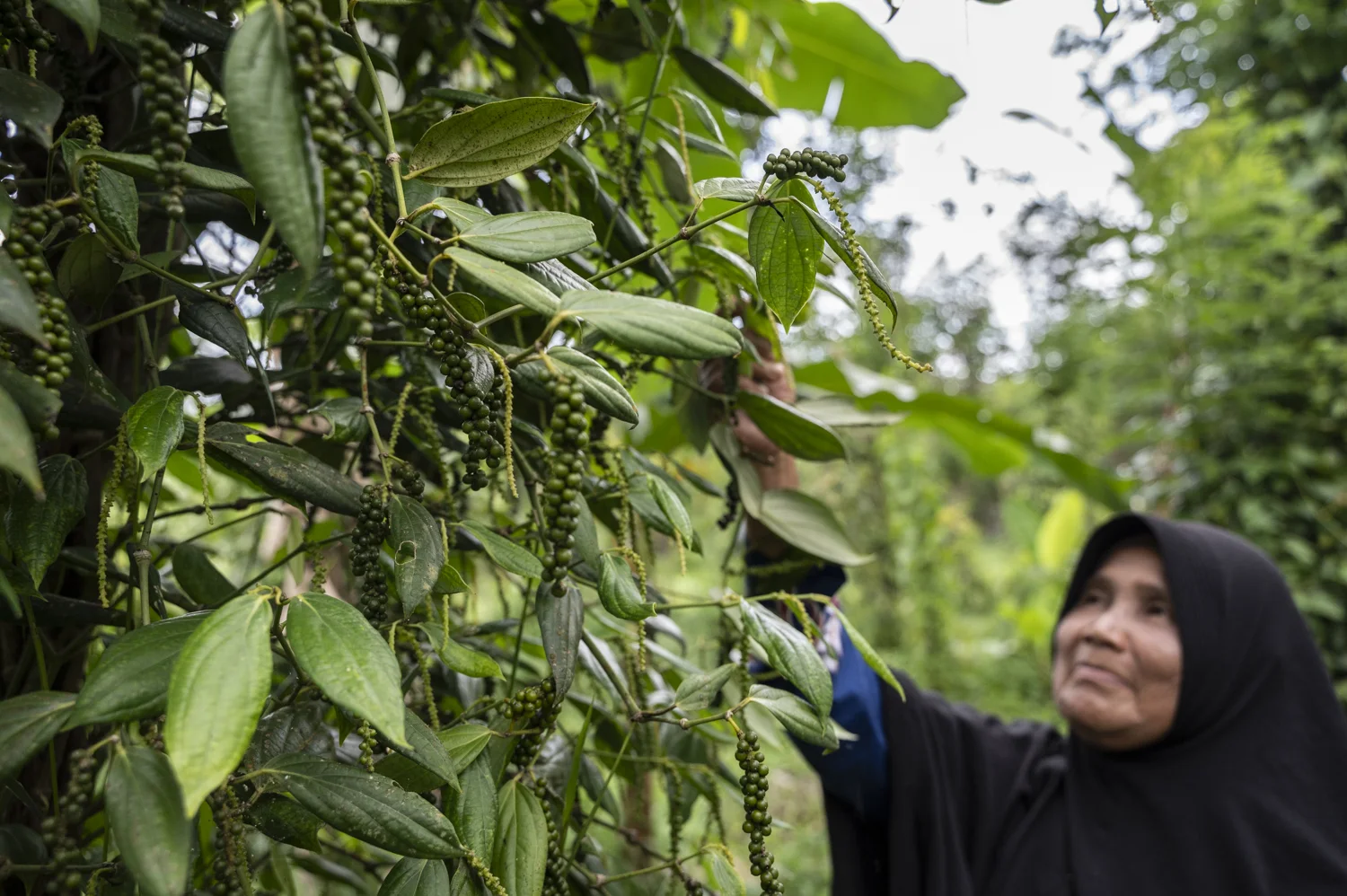
01Practice
Demoplot
Farmer-managed live learning spaces where pepper and agroforestry are tested side by side.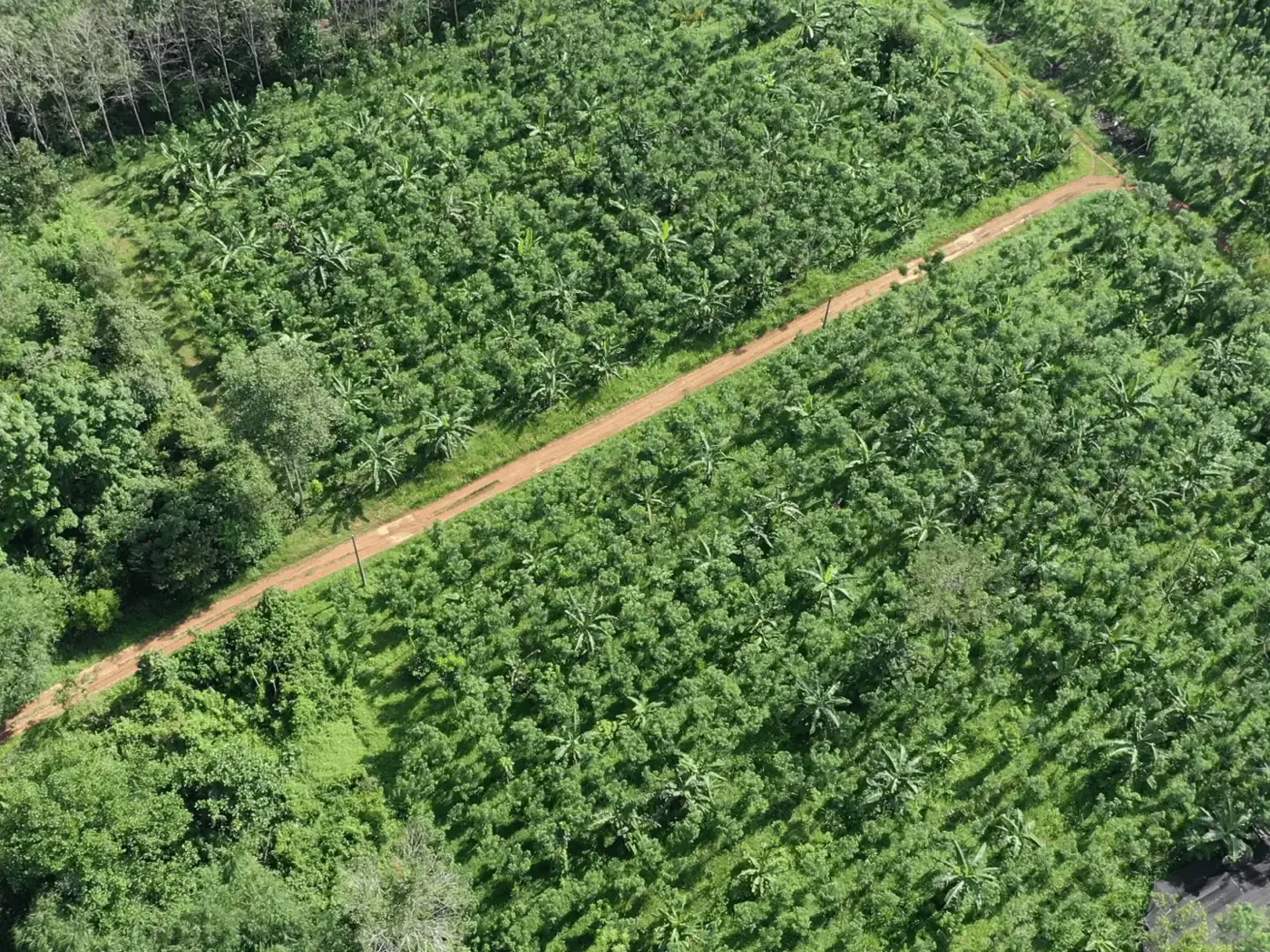 02
02Scale
Demofarm
A modular, replicable Kelekak agroforestry model kept by champion farmers to teach best practice at full farm scale.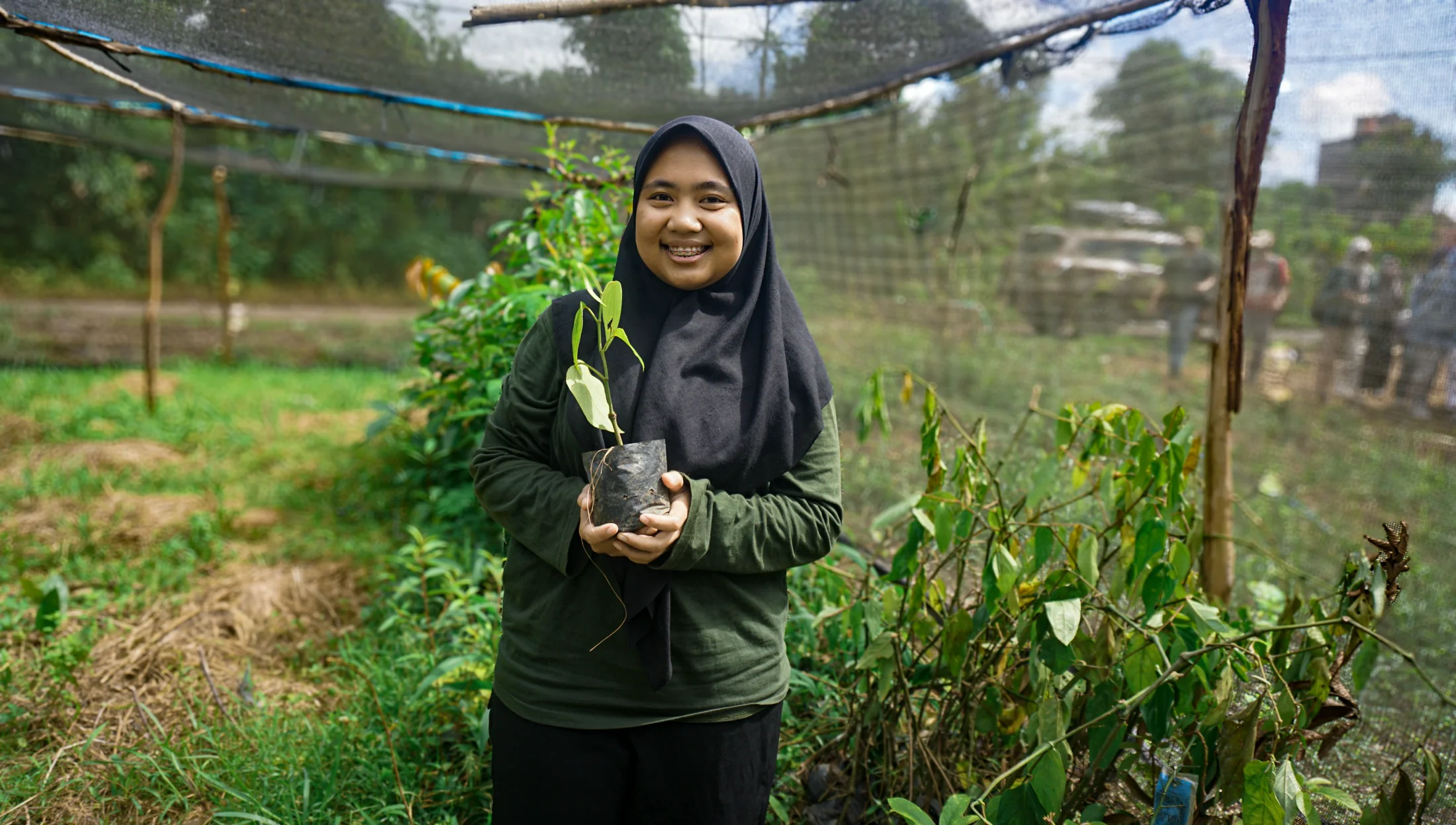 03
03Growth
Nursery
Structured pepper nurseries at every hub—prepared media, beneficial microbes, healthy plants.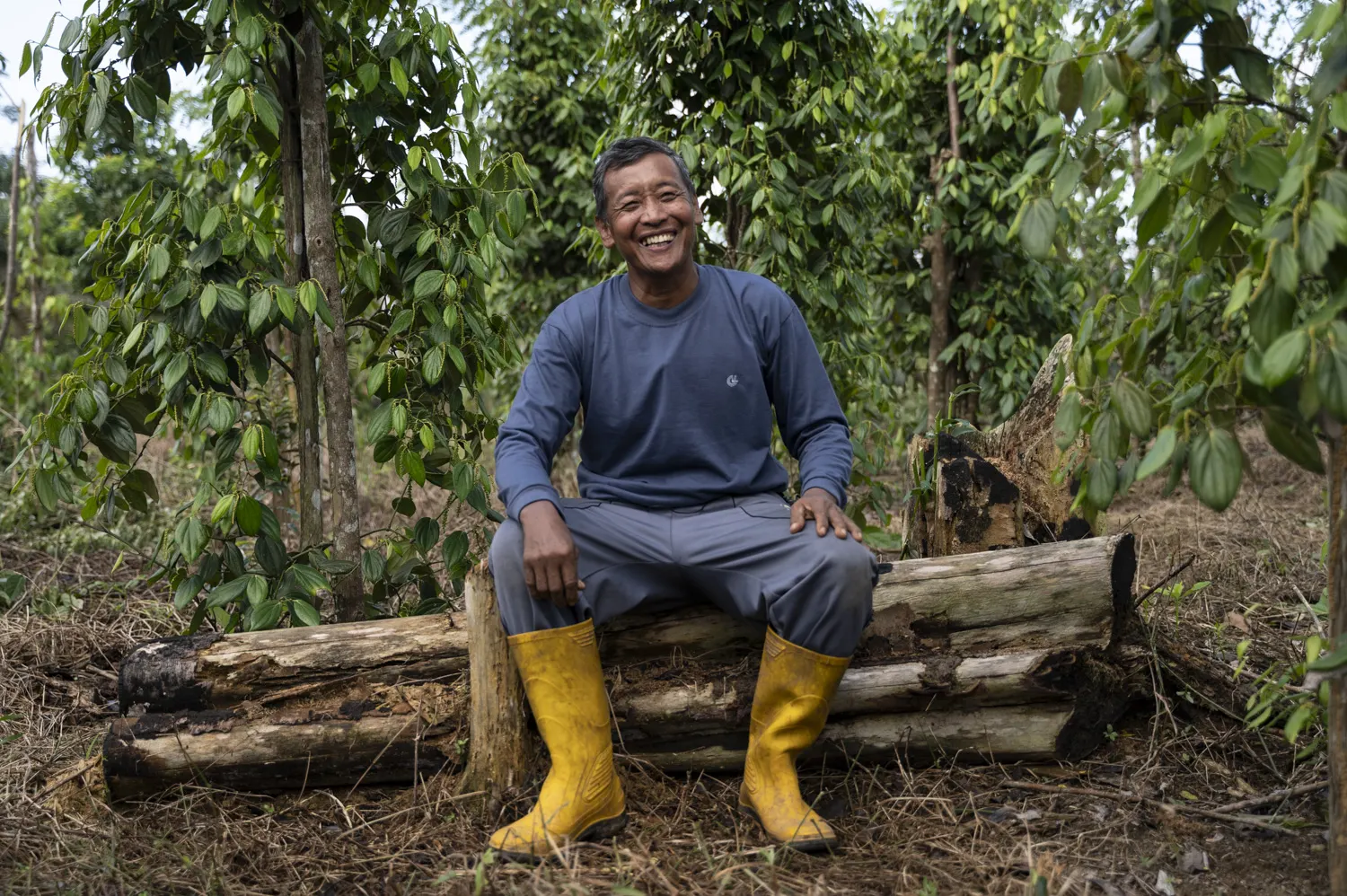 04
04Legacy
Kelekak restoration
Community-based tree planting in Bangka Belitung, moving land from monoculture to climate-resilient agroforestry.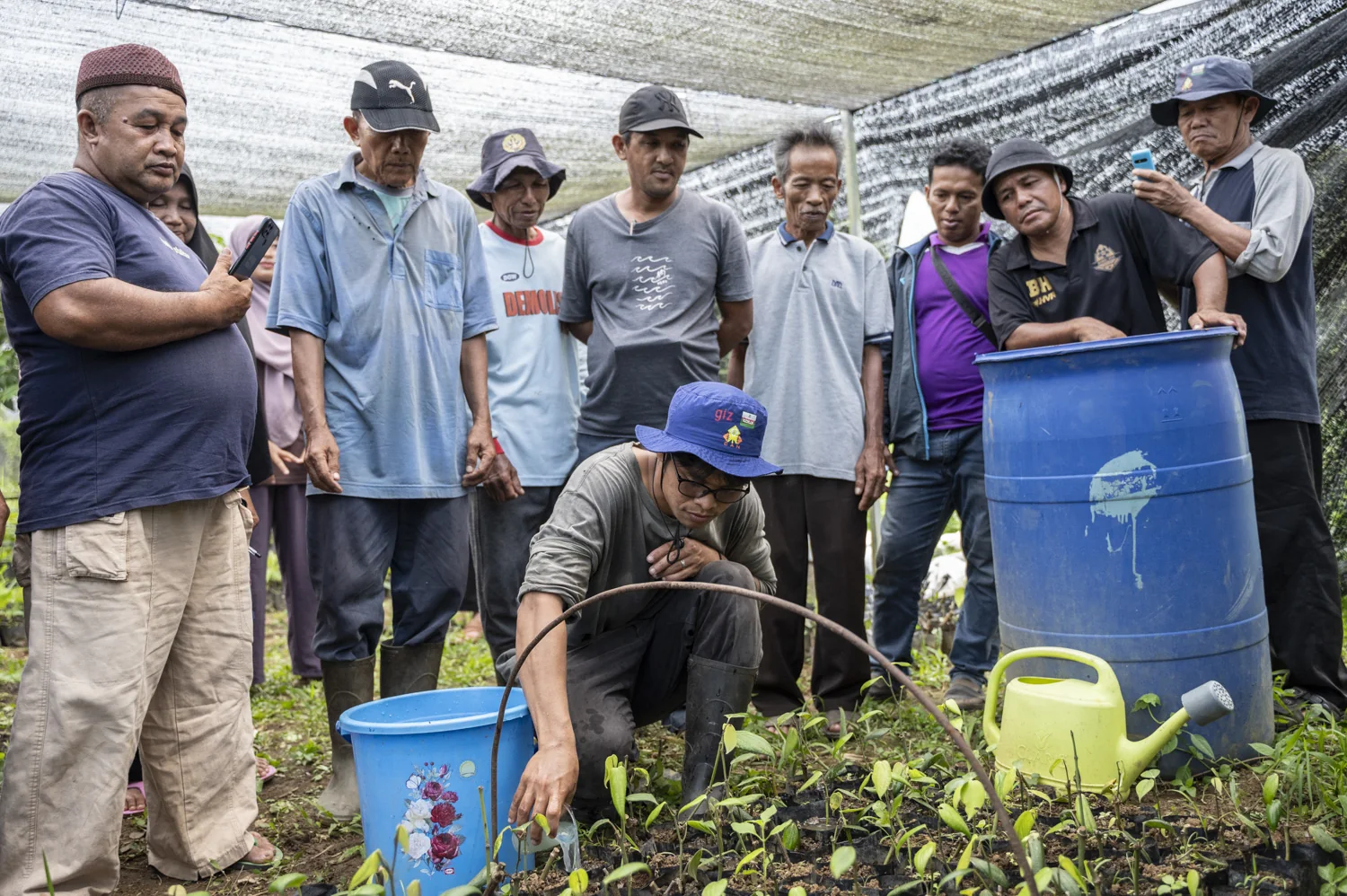 05
05Support
Training & coaching
Structured training followed by monitoring through the first six months of a farm's transition—the period that decides whether a new system takes.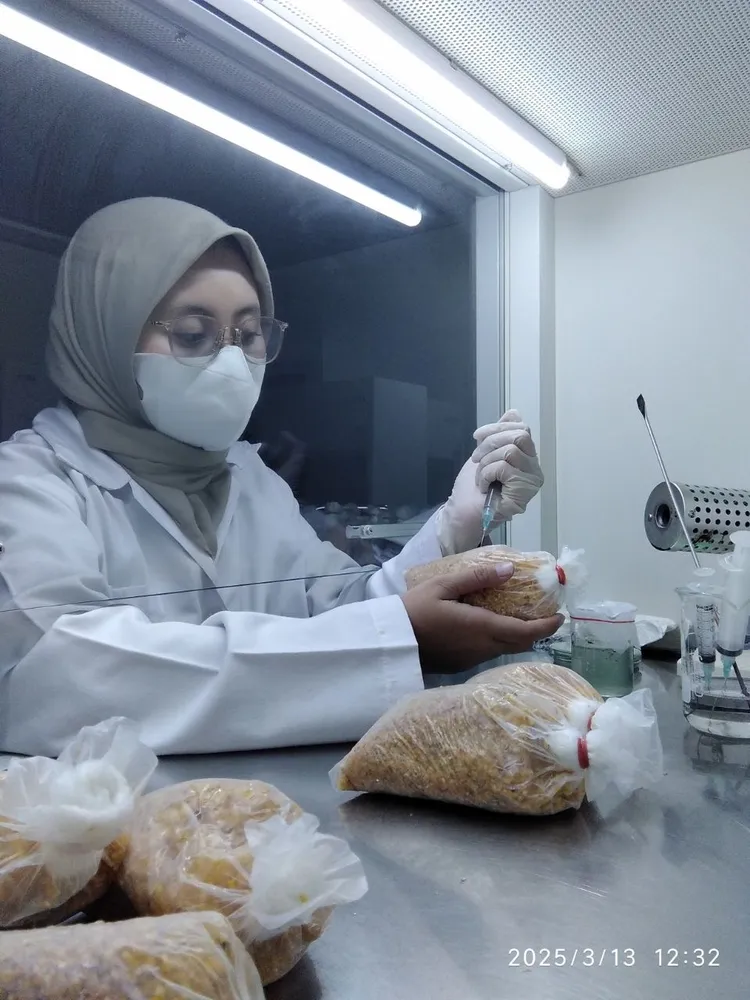 06
06Soil health
Soil lab & consultation
Biological inputs produced locally, paired with plot-specific guidance for healthier soil, stronger plants, and practical farm decisions.07Value addition
Post-harvest
Better handling, drying, grading, and processing protect quality after harvest and create more value from every crop in the system.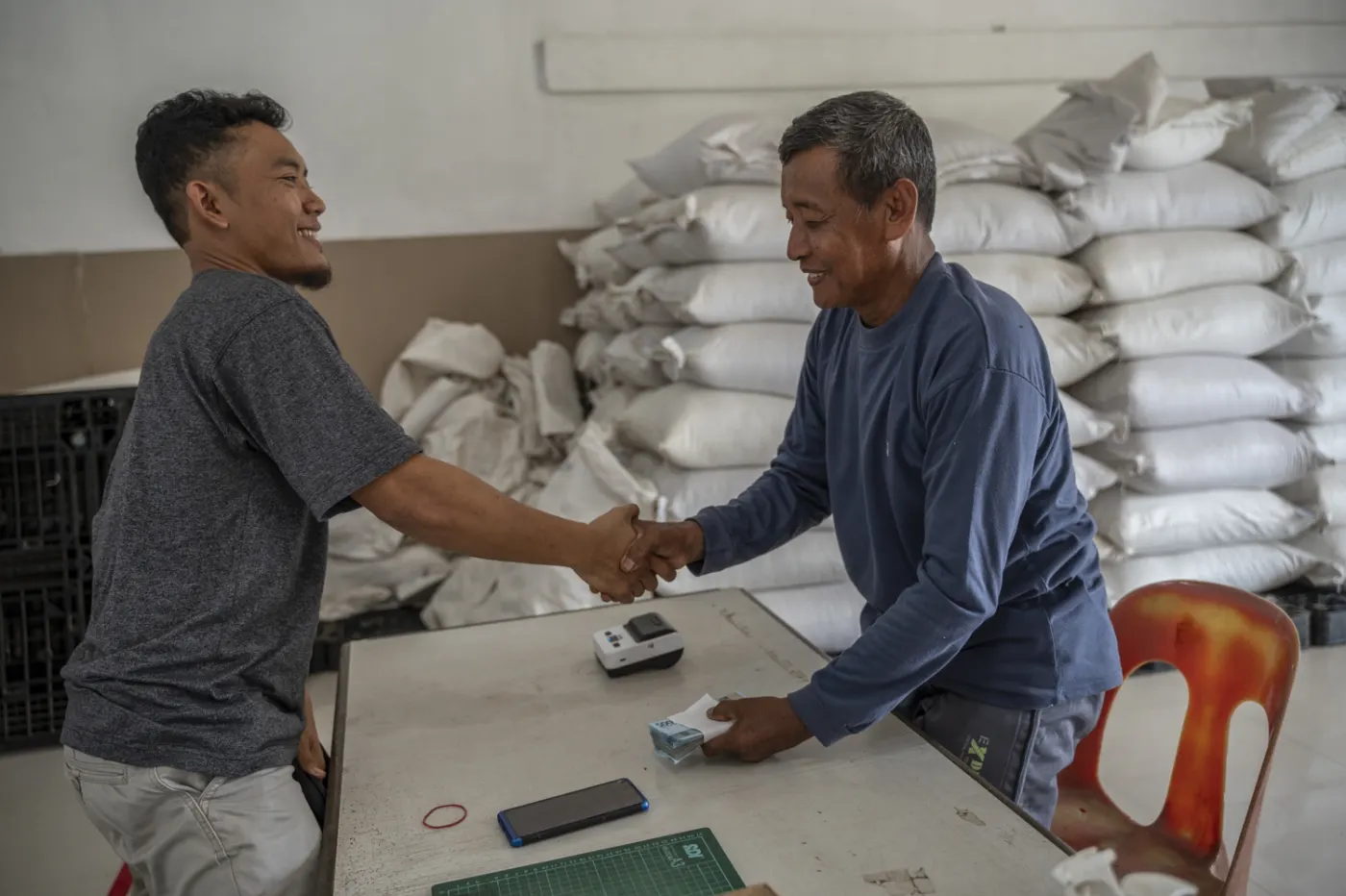 08
08Traceability
Connecting farmers to market
Traceable supply chains connect farmers with buyers, so quality, origin, and fair value travel together—and farmers are paid against a record, not a guess.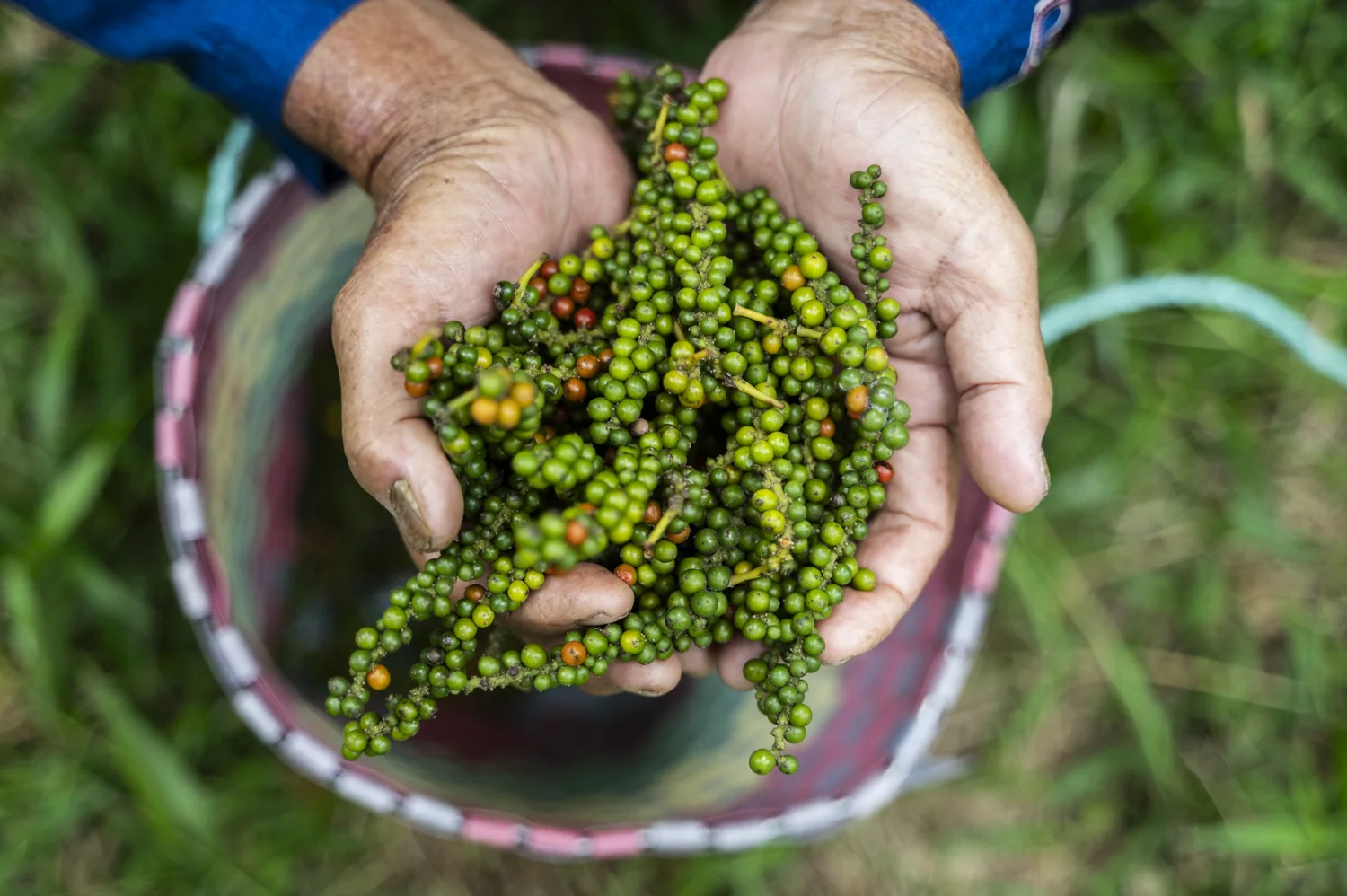 09
09MUTN · Finance
Access to finance
Through Mitra Usaha Tani Nusantara (MUTN), farmers are connected to suitable financing for planting material, farm improvements, and the transition to regenerative agroforestry.06 One connected system
What grows
together, thrives.
Regeneration works when ecological health and farmer prosperity are treated as the same goal.
Restore
Trees, roots, and diverse crops rebuild soil, shade, water cycles, and biodiversity.
Equip
Practical knowledge and local facilities help farmers adapt with confidence.
Connect
Transparent supply chains help quality, origin, and fair value travel together.
Let's grow the movement
Regenerate land.
Support livelihoods.
Partner with aGROWforests to help farmer-led agroforestry take root and scale across Indonesia.
Partner with us ↗
In cooperation with